
1) Introduction: The Dual Face of “Cotton Castle”
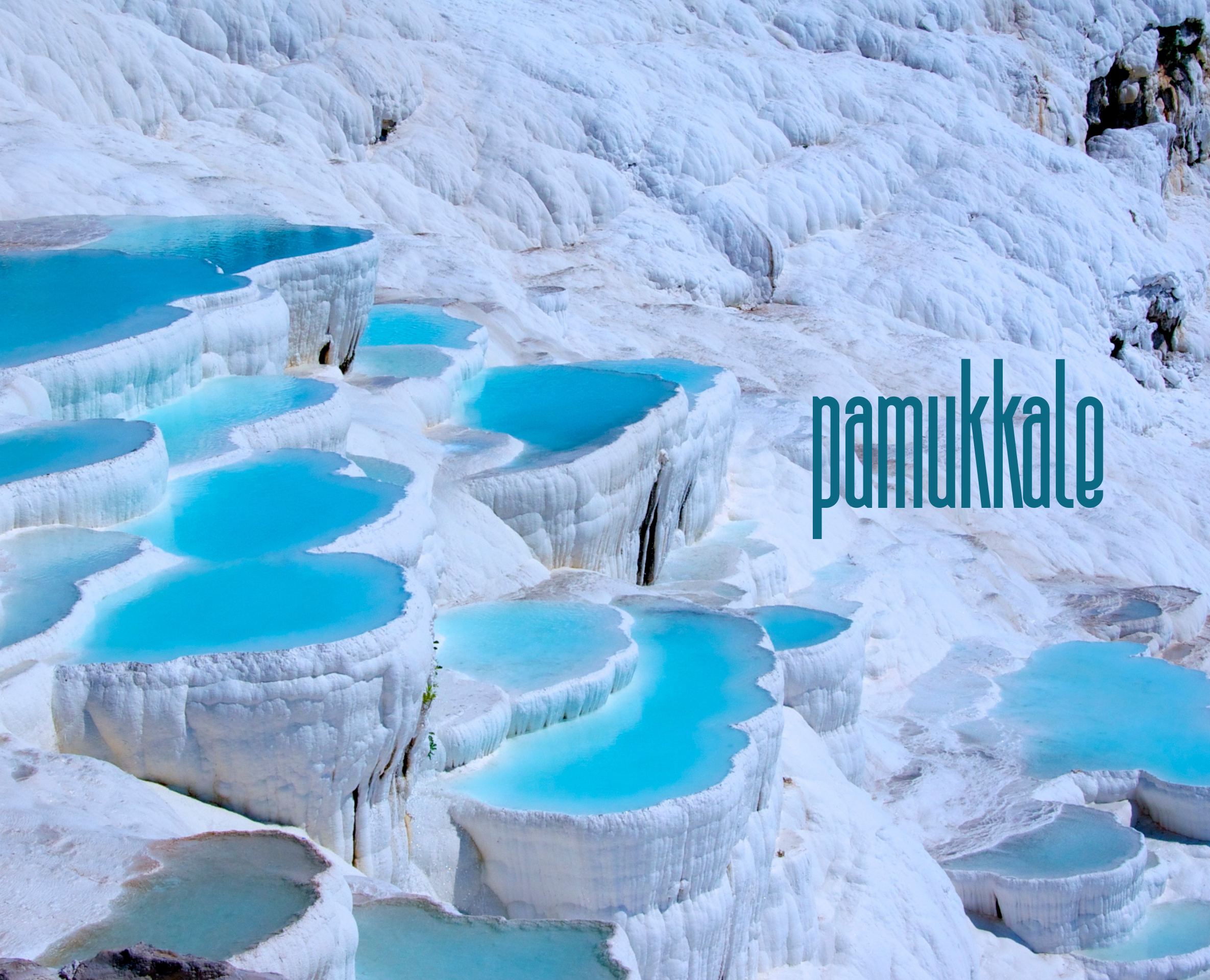
Pamukkale, located in the Denizli basin of southwestern Turkey, is one of the world’s most striking natural and cultural landscapes. Its dazzling white travertine terraces, formed by calcium-rich thermal waters cascading down the slopes, have inspired the name “Pamukkale,” literally meaning “Cotton Castle.”
Atop these terraces lies the ancient Greco-Roman city of Hierapolis, a major center for health, religion, and culture. The unique combination of natural hydrothermal formations and monumental ruins led UNESCO to inscribe Pamukkale–Hierapolis as a mixed World Heritage Site (natural + cultural) in 1988.
2) Geological Background: The Science of Travertines
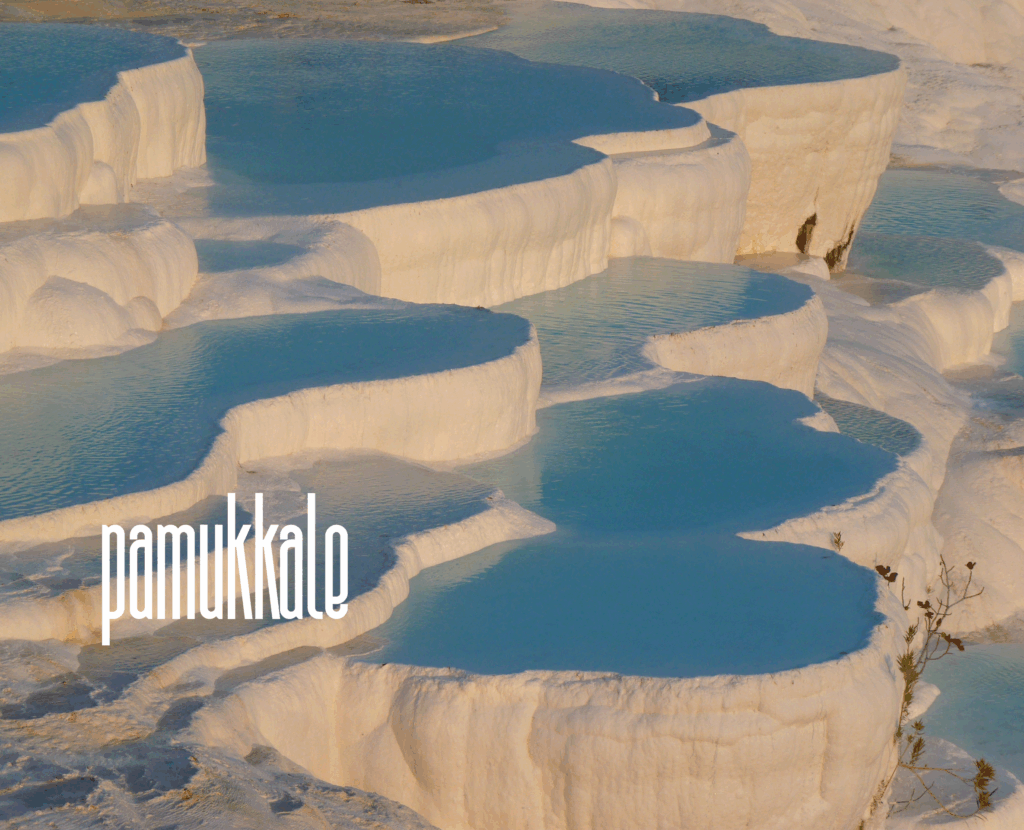
Pamukkale’s travertines are created by the precipitation of calcium carbonate from thermal spring waters that lose carbon dioxide as they emerge on the surface. Over time, layers of calcite accumulate, forming terraces, stalactites, and pools.
- Water temperature typically ranges between 35–38°C in Pamukkale, while nearby Karahayıt springs are hotter and iron-rich, producing reddish deposits.
- The rate of deposition depends on water flow, CO₂ loss, sunlight exposure, and microbial activity (algae and bacteria).
- Any disruption—such as excessive foot traffic, improper water management, or pollutants—can cause discoloration or erosion of the travertines.
This fragile geochemical process explains why UNESCO and Turkish authorities have implemented strict conservation measures since the late 20th century.
3) Regional and Historical Context
Pamukkale lies within the ancient region of Phrygia, along the Maiandros (Meander) River valley. Hierapolis shared cultural and economic networks with neighboring cities like Laodicea and Colossae. Its elevated plateau not only ensured visibility across the plain but also reinforced the symbolic link between natural wonder and human settlement.
The thermal springs were central to the identity of the region: they were regarded not just as medical resources but as divine gifts, shaping religious rituals and civic life alike.
4) Hellenistic Foundations
Hierapolis was traditionally founded by the Attalid dynasty of Pergamon in the 2nd century BCE. Its early plan reveals a deliberate use of the healing waters to attract settlers. Inscriptions and archaeological finds suggest the presence of Apollo’s cult, as well as veneration of subterranean powers such as Plouton (Hades), indicating a spiritual dialogue between sky and underworld.
5) Roman Imperial Splendor
Major earthquakes in the 1st century CE devastated the city, but reconstruction under Roman imperial patronage transformed Hierapolis into a thriving urban center.
- Theatre: With a capacity of 10,000–12,000 spectators, the Roman theatre is adorned with Dionysian reliefs and stands as one of the best-preserved in Anatolia.
- Bath-Basilica Complex: A monumental bath and basilica reflect the Roman synthesis of health, hygiene, and social life. Today, this complex houses the archaeological museum.
- Frontinus Gate and Colonnaded Street: An impressive northern gate led into a colonnaded avenue, forming the civic axis of the city.
- Nymphaea and Hydraulic Engineering: Decorative fountains distributed both potable and thermal water across the city, demonstrating advanced hydraulic planning.
- Necropolis: Stretching over two kilometers, the necropolis contains sarcophagi, tumuli, and house-type tombs, offering insights into funerary customs of the Roman elite and commoners alike.
By the 2nd and 3rd centuries CE, Hierapolis had become one of the leading spa and healing cities of the Roman world.
6) The Ploutonion: Breath of the Underworld
A unique sanctuary, the Ploutonion, was located near the sacred thermal spring. Here, carbon dioxide gas seeped from underground fissures, creating a deadly atmosphere at ground level. Ancient authors described priests entering the cave unharmed, reinforcing the site’s mystical reputation.
Modern studies confirm that heavier CO₂ accumulated at low levels, killing animals but allowing trained individuals to survive briefly by standing upright. The Ploutonion thus symbolized the boundary between life and death, earth and underworld.
7) Health, Ritual, and Economy
Thermal waters shaped every aspect of Hierapolis:
- Medical use: Baths, drinking cures, and therapeutic pools treated ailments ranging from rheumatism to digestive disorders.
- Ritual purification: Water was central to religious rites, linking healing with the divine.
- Social economy: The baths and pools functioned as meeting places, enhancing the city’s economic vitality through visitors, markets, and artisans.
In this sense, Hierapolis was an ancient precursor to modern health tourism destinations.
8) Late Antiquity and Christianity
By the 4th century CE, Hierapolis had become a significant Christian center. Tradition holds that St. Philip the Apostle was martyred here. His Martyrium, an octagonal complex built on a hill, became a pilgrimage site. Pagan sanctuaries gradually gave way to Christian topography, while the city retained its reputation as a place of healing waters.
9) Byzantine Period: Fortifications and Continuity
During Byzantine rule, Hierapolis was fortified against invasions. Earthquakes repeatedly damaged the city, but repairs and adaptive reuse of buildings (such as converting baths into churches) prolonged its urban life. Hierapolis became a bishopric and retained its sacred status in the Christian world.
10) Seljuk, Ottoman, and Early Modern Impressions
After the region came under Turkish control, the thermal springs continued to be valued. Ottoman travelers described the dazzling white cliffs and healing waters. However, the monumental ruins largely remained a rural memory, awaiting rediscovery by modern archaeology.
11) European Discovery and Archaeological Research
From the 18th century, European travelers documented Pamukkale’s surreal landscapes. In the 20th century, Italian archaeologists began systematic excavations, revealing the theatre, bath-basilica, necropolis, and martyrium. Epigraphic and architectural studies positioned Hierapolis as a key case study in Greco-Roman urbanism.
12) UNESCO Inscription and Conservation
Pamukkale–Hierapolis was inscribed as a UNESCO World Heritage Site in 1988 for both natural and cultural values. Conservation efforts included:
- Removing hotels built directly on the terraces.
- Prohibiting vehicles on the travertines.
- Introducing barefoot-only zones to minimize erosion.
- Managing water flow with rotational distribution to keep terraces wet and white.
These strategies restored the travertines’ brilliance and ensured long-term sustainability.
13) The “Antique Pool” (Cleopatra’s Pool)
Popularly known as Cleopatra’s Pool, this ancient thermal pool contains submerged marble columns and blocks from Roman structures toppled by earthquakes. Its warm, mineral-rich waters attract thousands of visitors annually. Although the Cleopatra legend is unverified, the pool embodies the fusion of archaeology and leisure.
14) Karahayıt Springs: The Red Waters
Just north of Pamukkale, the Karahayıt springs produce iron-rich waters, forming reddish travertines. This variation highlights the hydrothermal diversity of the region and expands its appeal for therapeutic tourism.
15) Discoloration Challenges and Water Management
Travertines lose their whiteness when water flow is mismanaged or when surfaces are polluted. To counteract this:
- Authorities rotate water supply across terraces.
- Seasonal closures allow natural recovery.
- Continuous monitoring ensures calcite deposition remains active.
This dynamic management balances ecological processes with tourism demand.
16) Tourism and Carrying Capacity
Pamukkale is among Turkey’s most visited heritage sites. To prevent degradation, management policies focus on:
- Limiting visitor numbers in sensitive areas.
- Ensuring barefoot entry to pools.
- Creating interpretive signage and structured walking paths.
- Promoting museums and alternative attractions to reduce pressure on the travertines.
17) Climate Change and Future Risks
Shifts in precipitation, droughts, and heat waves could affect thermal spring discharge and chemistry. Mitigation strategies include:
- Long-term hydrogeological monitoring.
- Adaptive water management systems.
- Incorporation of climate projections into heritage planning.
Pamukkale is not a static monument but a living hydrothermal ecosystem requiring constant care.
18) Hierapolis Archaeological Museum
Housed in the Roman Bath complex, the museum exhibits sculptures, inscriptions, and everyday artifacts, offering insight into Hierapolis’ civic and religious life. Dionysian reliefs from the theatre, sarcophagi from the necropolis, and medical tools from the baths illustrate the interplay between culture and health.
19) Cultural Imagery and Memory
Pamukkale’s whiteness has inspired metaphors of purity and eternity, while its ruins embody resilience and transformation. The combination of dazzling nature and monumental architecture has made Pamukkale a symbol of Turkey’s heritage identity, widely promoted in tourism and cultural diplomacy.
20) Conclusion: A Living Synthesis of Nature and Culture
Pamukkale–Hierapolis is more than a collection of ruins or natural terraces—it is a dynamic landscape where geology and human history intersect. The travertines represent the creative force of water, while the city ruins narrate millennia of cultural evolution.
Safeguarding this dual heritage requires balancing scientific research, visitor management, and sustainable tourism. Ultimately, the miracle of Pamukkale lies not in its frozen past but in the continuous flow of its waters, shaping both stone and civilization.