

Alaçatı: The Jewel of the Aegean Coast
1. Introduction
Alaçatı, located within the district of Çeşme in İzmir Province on Turkey’s Aegean coast, is one of the most prominent destinations for cultural tourism, gastronomy, and windsurfing. Once a small and quiet town of stone houses and narrow cobbled streets, Alaçatı has transformed into a global hotspot while still preserving its authenticity. The combination of its rich history, unique architecture, culinary delights, and coastal beauty makes Alaçatı a compelling example of how tradition and modernity coexist in a Mediterranean setting.
2. Geographical Features
Situated approximately 70 kilometers west of İzmir city center, Alaçatı lies on the Çeşme Peninsula, which extends into the turquoise waters of the Aegean Sea. Its location provides several natural advantages:
- Climate: A Mediterranean climate with hot, dry summers and mild, rainy winters.
- Winds: Consistent strong winds, especially in summer, make Alaçatı one of the world’s premier destinations for windsurfing and kitesurfing.
- Landscape: Olive groves, vineyards, and gently rolling hills surround the town, creating a picturesque contrast with the sea.
- Coastline: Long sandy beaches and crystal-clear bays attract both local and international visitors.

3. Historical Background
Alaçatı’s history dates back to antiquity, when the wider Çeşme region served as part of the Ionian civilization. Throughout the centuries, it was influenced by Greek, Roman, Byzantine, and Ottoman cultures.
- Greek Heritage: During the Ottoman period, the town was largely inhabited by Greek communities, who left behind their signature stone houses with wooden shutters and courtyards.
- Agriculture and Trade: Alaçatı was historically renowned for its vineyards and olive oil production, contributing significantly to the local economy.
- Modern Transformation: In the early 2000s, Alaçatı underwent rapid gentrification. Once a quiet village, it evolved into a prestigious tourism hub, with boutique hotels, art galleries, gourmet restaurants, and nightlife venues.
4. Architecture and Urban Identity
The defining characteristic of Alaçatı is its architecture:
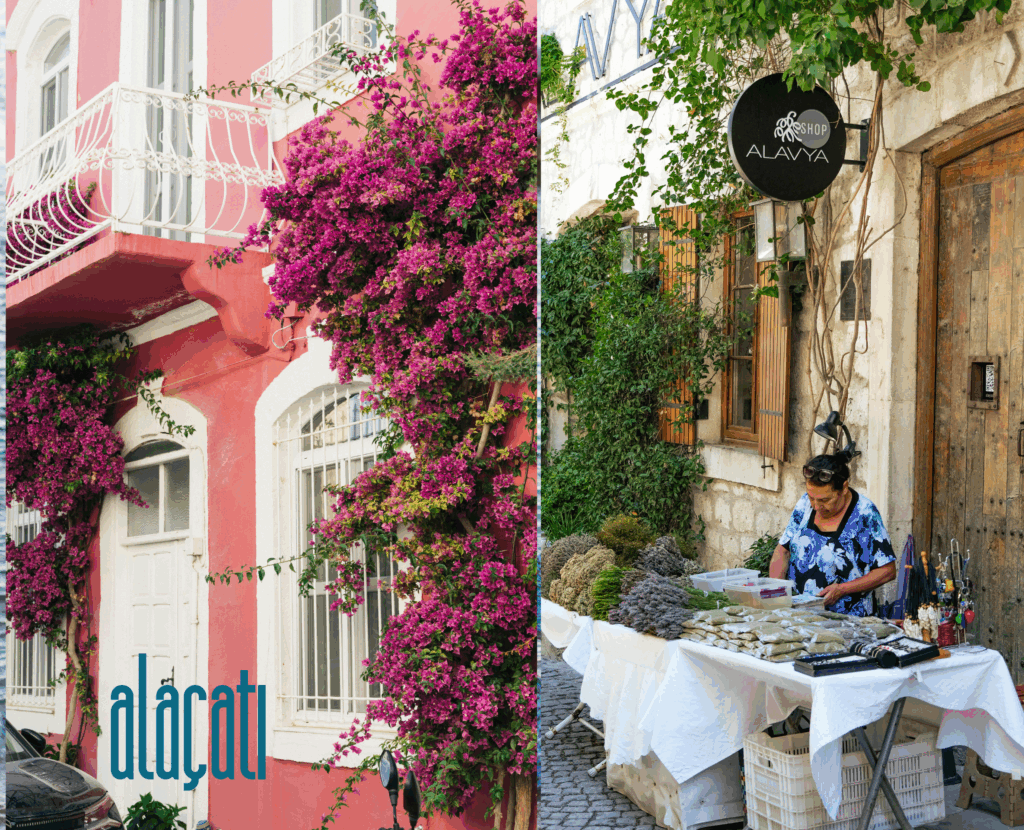
- Stone Houses: Built with locally sourced stone, these houses maintain cool interiors during hot summers. Their pastel-colored shutters and bougainvillea-covered facades create postcard-perfect views.
- Narrow Streets: The winding cobblestone streets are designed to shield inhabitants from strong winds while fostering social interaction.
- Boutique Hotels: Many of the old houses have been converted into boutique hotels, carefully preserving their historical character.
- Modern Additions: Despite modernization, Alaçatı enforces strict building codes to maintain its authentic architectural style.
5. Culture and Lifestyle
Alaçatı is more than a holiday resort; it embodies a distinct lifestyle:
- Markets: The Alaçatı Open Market on Saturdays offers fresh produce, local delicacies, antiques, and handicrafts.
- Festivals: The International Alaçatı Herb Festival celebrates local herbs, natural remedies, and regional cuisine.
- Nightlife: Trendy bars, music venues, and open-air clubs attract young travelers, especially during summer months.
- Art and Craft: Local artisans keep traditional pottery, weaving, and culinary arts alive.
6. Gastronomy
The culinary scene in Alaçatı is world-renowned:
- Aegean Cuisine: Olive oil–based dishes, fresh seafood, and vegetables define the diet.
- Signature Dishes: Artichokes, stuffed zucchini blossoms, sea bass, octopus, and meze plates.
- Wines: Alaçatı has revived its winemaking tradition, producing boutique wines from indigenous grape varieties.
- Desserts: Turkish sweets like şekerpare and baklava, alongside Greek-influenced pastries, reflect cultural fusion.
7. Tourism and Attractions
Alaçatı offers a wide spectrum of attractions:
- Windsurfing & Kitesurfing: Alaçatı Bay is globally recognized as one of the top three windsurfing spots in the world. International championships are regularly hosted here.
- Beaches: Ilıca Beach with its thermal waters, Delikli Koy with its dramatic cliffs, and private beach clubs with lively atmospheres.
- Historical Sites: Old Greek churches, Ottoman mosques, and traditional stone houses provide cultural depth.
- Proximity to Çeşme: Visitors often combine Alaçatı with Çeşme’s attractions such as Çeşme Castle, the marina, and hot springs.
8. Economy and Global Recognition
Tourism is the main economic driver, supported by gastronomy, real estate, and boutique winemaking. Alaçatı’s reputation has spread worldwide, attracting celebrities, investors, and luxury tourism companies. It is now a significant part of Turkey’s health and leisure tourism sector, often integrated into spa, wellness, and dental/medical tourism packages offered in the region.
9. Conclusion
Alaçatı represents a successful blend of heritage preservation and modern tourism development. Its identity as a windsurfing capital, culinary hotspot, and architectural gem has transformed it into an international destination. For travelers seeking authenticity, luxury, and natural beauty, Alaçatı remains the jewel of the Aegean.