
Gaziantep: A Comprehensive Introduction to the Cultural and Culinary Capital of Southeastern Turkey
1. Introduction
Gaziantep, historically known as Antep, is one of the most ancient continuously inhabited cities in the world and a prominent urban center in Southeastern Turkey. As part of the broader Mesopotamian cultural landscape, Gaziantep represents a unique intersection of history, geography, cuisine, and contemporary economic growth. The city has gained global recognition not only for its industrial capacity and role in Turkish economic development but also for its distinctive cultural identity, culinary heritage, and tourism potential. In 2015, Gaziantep’s culinary tradition was inscribed into the UNESCO Creative Cities Network under the category of gastronomy, officially cementing its reputation as a “world capital of flavor.”
2. Geographical Features and Environment
Situated in the western part of Turkey’s Southeastern Anatolia Region, Gaziantep lies close to the Syrian border, approximately 127 kilometers north of Aleppo. The city is positioned on a plateau at an altitude of around 850 meters above sea level. This geographic setting has historically allowed Gaziantep to act as a strategic crossroads between Anatolia and Mesopotamia. The city is approximately 200 kilometers from the Mediterranean coast, which grants it a transitional climate—hot, dry summers and relatively cold, wet winters.
The fertile plains surrounding Gaziantep, particularly the valleys nourished by the Euphrates River, have long supported agricultural activity. Pistachios, olives, grapes, and cereals are widely cultivated in the region, forming the agricultural backbone that feeds into Gaziantep’s world-famous gastronomy. Its proximity to trade routes historically known as the Silk Road further shaped its development, enabling the city to serve as a bridge between East and West.
3. Historical Background
Gaziantep has a recorded history stretching back more than 5,000 years. Archaeological evidence indicates continuous settlement since the Bronze Age, with influences from the Hittites, Assyrians, Persians, Romans, Byzantines, and Seljuks. The city was also a significant hub during the Ottoman Empire, noted for its craftsmanship, trade networks, and culinary traditions.
The modern name “Gaziantep” was conferred after the Turkish War of Independence in the early 20th century, when the city was honored with the title “Gazi” (meaning “veteran” or “war hero”) in recognition of its heroic resistance against occupying forces. Today, Gaziantep’s historical layers are visible in its urban fabric, which blends traditional stone houses, Ottoman-era bazaars, and modern urban developments.
4. Cultural Identity and Society
Gaziantep’s cultural identity is defined by diversity and resilience. Its population, exceeding two million, represents a mosaic of Anatolian traditions with influences from Arabic, Kurdish, and Armenian communities that have historically coexisted in the region.
The city is known for its traditional handicrafts, including copperware, mother-of-pearl inlay (sedef), carpet weaving, and leatherwork. These crafts are not only economic activities but also cultural symbols passed down through generations.
Music and dance are integral to Gaziantep’s social life. Traditional folk music is often performed with instruments such as the zurna and davul, accompanied by regional dances like halay. Religious and national festivals are celebrated with vibrancy, reflecting a strong sense of community solidarity.
5. Gastronomy: The Culinary Capital of Turkey
5.1 Pistachio as the City’s Symbol
Gaziantep pistachios are internationally renowned for their high quality and distinctive flavor, forming the backbone of the city’s culinary culture. Pistachios are used not only as snacks but also as ingredients in desserts, kebabs, and pastries.
5.2 Baklava
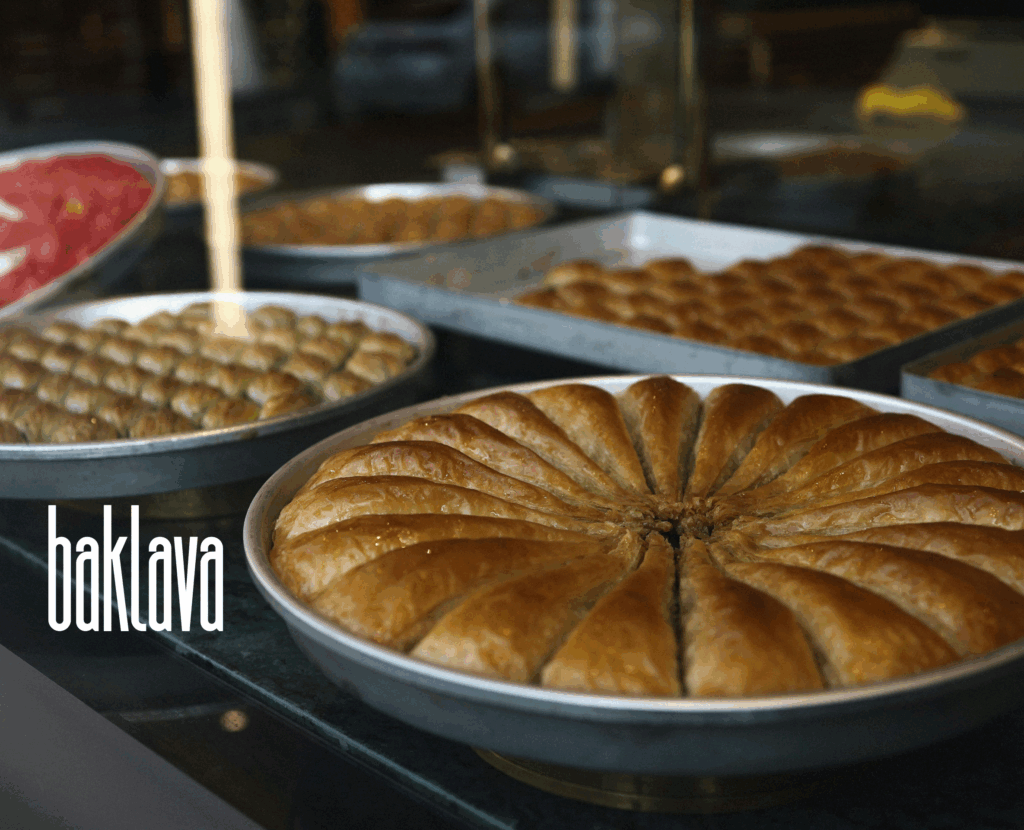
Gaziantep is considered the birthplace of authentic Turkish baklava. Made with layers of thin filo pastry, pistachio filling, and syrup, Antep baklava has been granted geographical indication (GI) status in the European Union, emphasizing its authenticity and cultural value.
5.3 Kebabs and Meat Dishes
The city boasts over 300 varieties of kebabs, including the famous Ali Nazik kebab (eggplant and minced meat), lahmacun (thin bread with minced meat and herbs), and çiğ köfte. The use of spices such as isot pepper, sumac, and cumin reflects the region’s Mesopotamian culinary heritage.
5.4 Soups, Stews, and Specialty Dishes
Unique dishes include yuvarlama (a festive dish made of minced meat and rice balls in yogurt sauce), beyran soup (a rich lamb and rice soup), and dolma made with regional peppers and eggplants. These dishes emphasize Gaziantep’s role as a living archive of Anatolian-Mesopotamian food culture.
6. Tourism and Heritage Sites
6.1 Gaziantep Castle
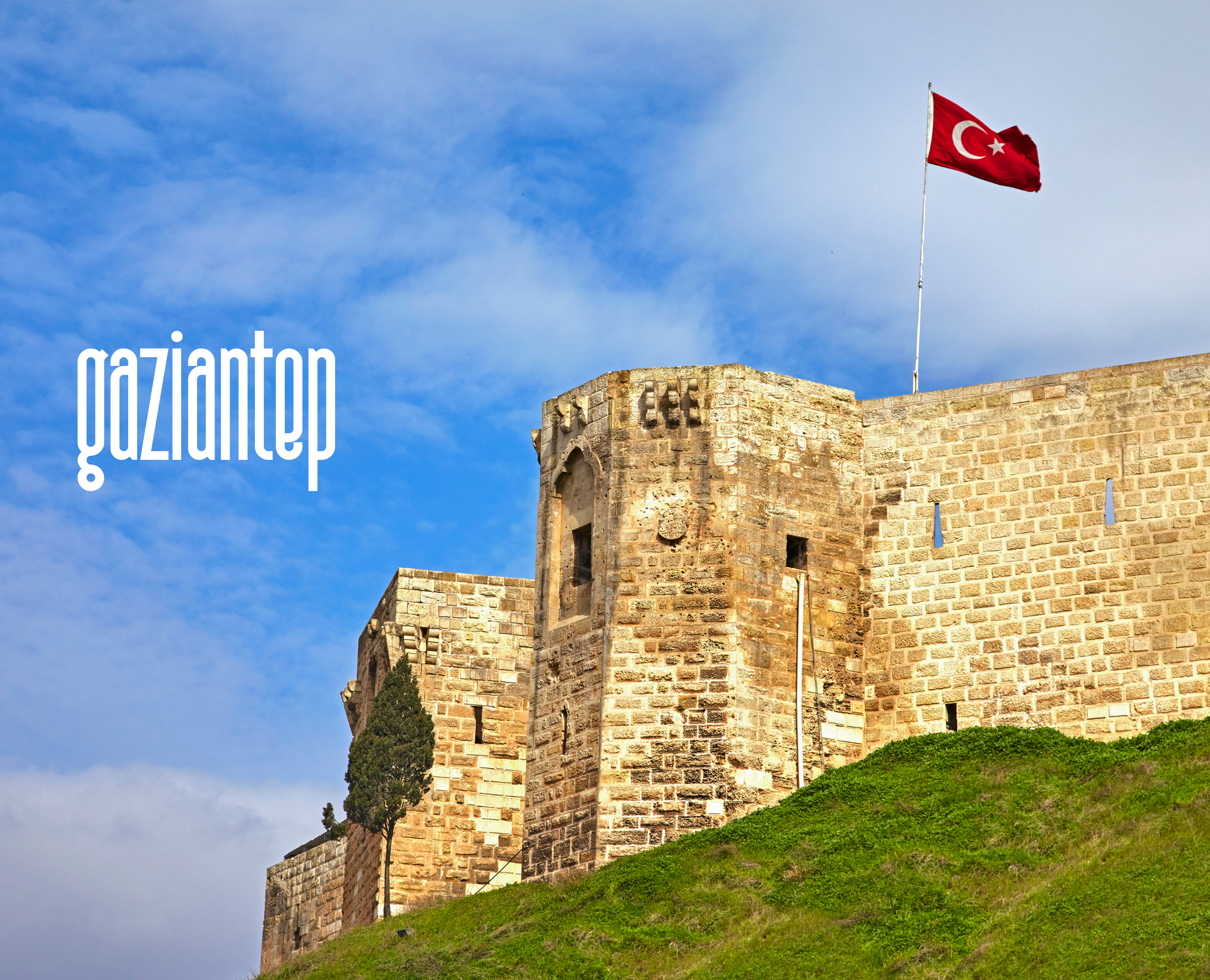
An imposing fortress located in the city center, Gaziantep Castle has origins dating back to the Roman period but was expanded and fortified by the Byzantines and Ottomans. Today, it houses exhibitions narrating the city’s history of defense and resilience.
6.2 Zeugma Mosaic Museum
The second-largest mosaic museum in the world, this institution exhibits stunning mosaics excavated from the ancient city of Zeugma on the banks of the Euphrates. The “Gypsy Girl” mosaic, in particular, has become an emblematic cultural symbol of Gaziantep.
6.3 Historical Bazaars and Inns
The city hosts vibrant marketplaces such as the Bakırcılar Çarşısı (Coppersmith Bazaar) and traditional inns (han), which once served as caravanserais for Silk Road merchants. These bazaars offer an immersive cultural experience where visitors can engage with artisans and purchase authentic crafts.
6.4 Religious and Archaeological Sites
Mosques such as the Alaüddevle Mosque and the Boyacı Mosque reflect the city’s Ottoman heritage. Nearby archaeological sites, including Rumkale and the ancient city of Zeugma, add to the region’s rich historical portfolio.
7. Economic and Modern Development
Gaziantep is among the top industrial cities of Turkey, with strong sectors in textiles, food processing, and machinery. The city’s organized industrial zones are central to the regional economy, making it both a historic and contemporary trade hub. Its culinary tourism industry further strengthens its economic profile, attracting visitors domestically and internationally.
8. Conclusion
Gaziantep represents a synthesis of geography, history, and culture. Its strategic location between Anatolia and Mesopotamia has fostered a distinctive identity that is manifested in its cuisine, crafts, and architecture. With global recognition for its gastronomy and rich cultural heritage, Gaziantep stands not only as a city of Turkey but also as a universal center of human creativity and resilience. For scholars, travelers, and culinary enthusiasts alike, Gaziantep is a destination where the past and present converge harmoniously.