
The Maiden’s Tower (Kız Kulesi), Istanbul: History, Silhouette, and Setting
Overview
Rising from a tiny islet just 200 meters off the Üsküdar (Salacak) shore at the southern entrance of the Bosphorus, the Maiden’s Tower (Kız Kulesi) is one of Istanbul’s most evocative landmarks. For centuries it has served as sentinel, lighthouse, quarantine station, and symbol—its image even graced the Turkish 10-lira banknote between 1966 and 1981. Today it welcomes visitors as a museum following a recent, comprehensive restoration. Vikipedi
Geographic Setting & Silhouette
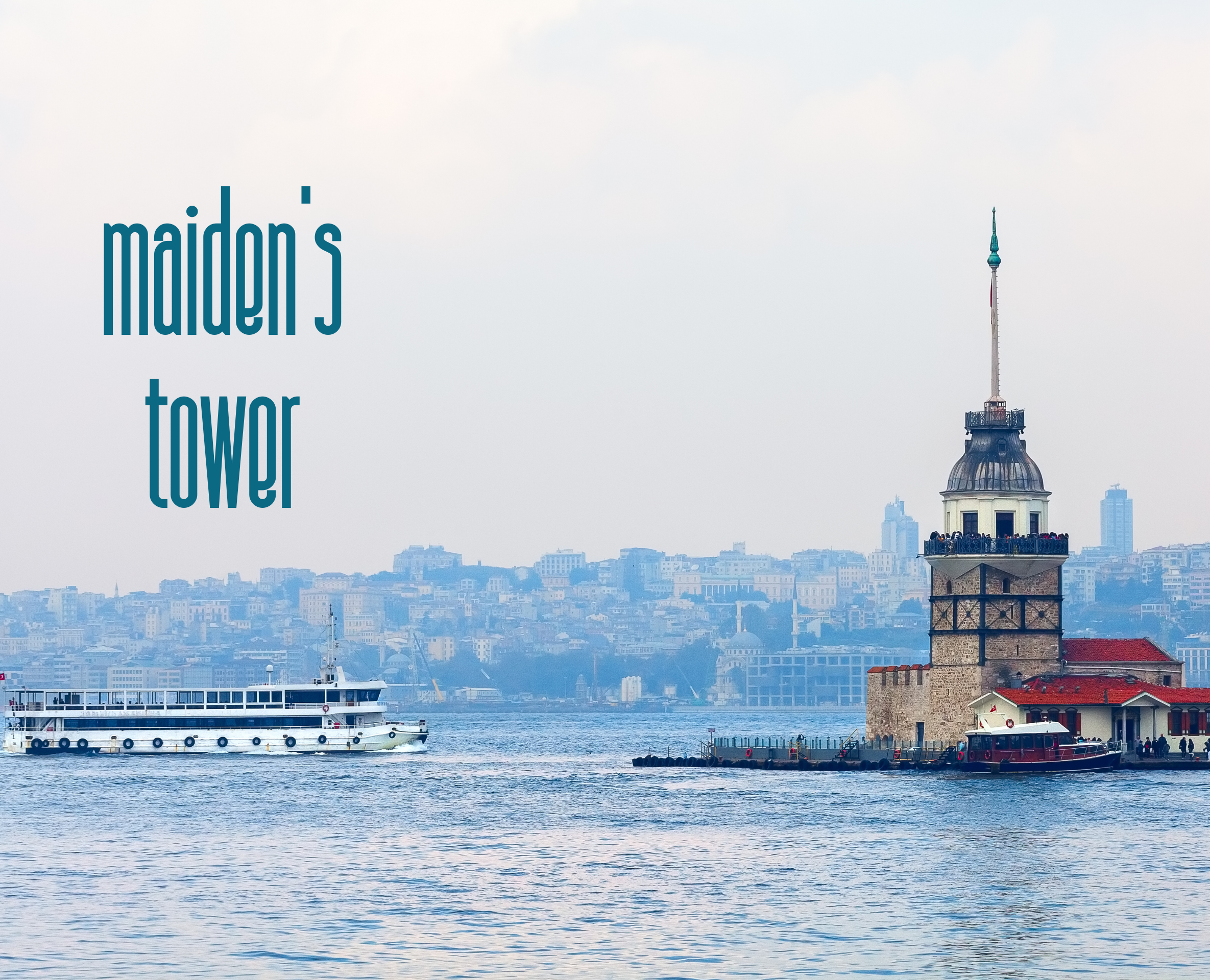
The tower occupies a rocky outcrop where the Bosphorus narrows toward the Sea of Marmara. This placement—at the threshold between continent and sea—made it ideal for controlling traffic, signaling, and later for guiding navigation. Seen from the Asian side (Üsküdar/Salacak), the tower aligns across the water with Sarayburnu (Seraglio Point) and the historic peninsula; from the European side, it punctuates panoramas of Üsküdar and the First Bosphorus Bridge.
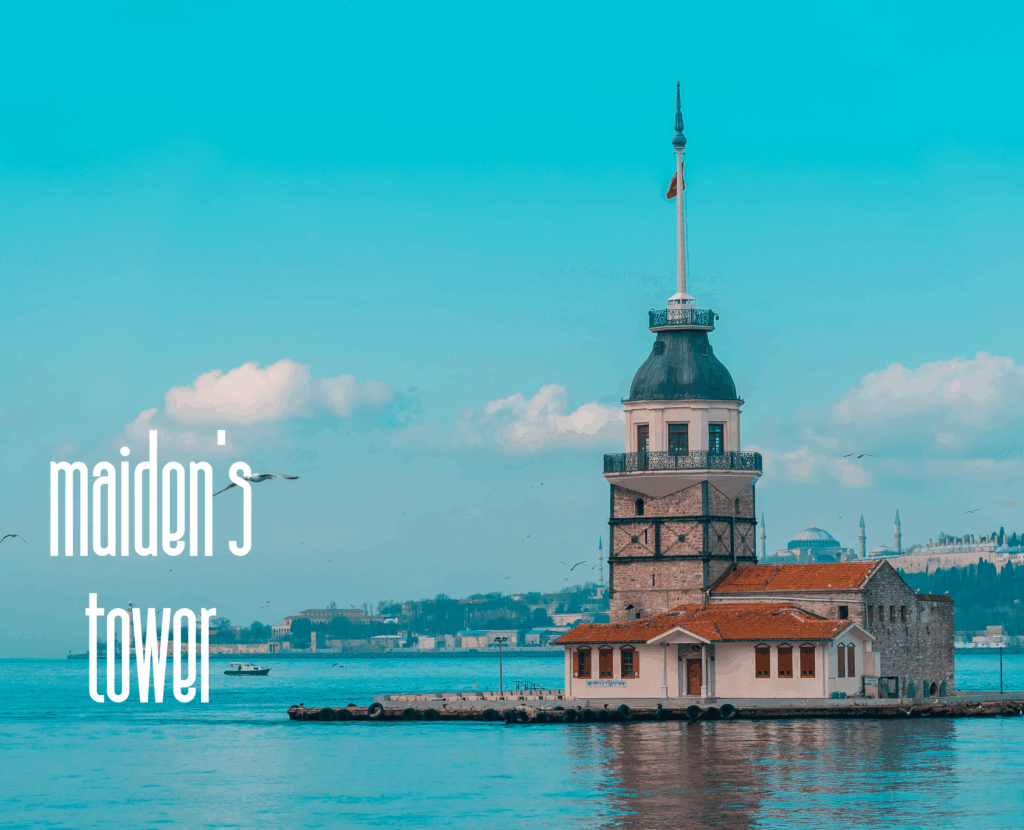
Architecturally, the structure presents a stone platform and masonry base surmounted by a compact, multi-storey tower with a lantern and flag mast. Its proportions are slender without being fragile, which explains why it functions so powerfully as a silhouette: the vertical shaft and lantern create a crisp profile against dawn and sunset skies, while the low platform spreads horizontally to absorb waves and visually “anchor” the form in the strait. The result is a landmark that reads clearly from virtually any viewpoint around the lower Bosphorus—part lookout, part lighthouse, entirely emblematic of Istanbul’s seascape. (For location and distance, see Wikipedia’s top summary of the site.) Vikipedi
A Long History in Brief
- Possible Classical precursor (5th c. BCE): Ancient sources and later accounts suggest a customs or signaling station on rocks off Chrysopolis (Üsküdar) after the Athenian victory at Cyzicus (408 BCE). While details are debated, the site’s strategic role at the Bosphorus throat is clear. Vikipedi
- Byzantine foundation (1110): Emperor Alexios I Komnenos erected a wooden tower here, protected by a stone wall. An iron chain was stretched from this islet to a counterpart tower at Mangana (on the European shore) to regulate passage—an early strait-control system echoed elsewhere in Constantinople. Remains of the connecting works have been noted underwater near the Asian side. VikipediThe Byzantine Legacy
- Conquest and Ottoman use (1453 onward): During the siege, the islet held a Byzantine garrison under the Venetian Gabriele Trevisano. After the conquest, the Ottomans used it as a watchtower guarding the Bosphorus approach. Vikipedi
- Calamities and rebuilding: The tower was damaged in the 1509 earthquake, then burned in 1721. Repairs to the surrounding walls followed in 1731 and 1734, and in 1763 the superstructure was rebuilt in stone, yielding the essential form we recognize today. VikipediThe Byzantine Legacy
- 19th–20th centuries: In 1829 it became a quarantine station (notably during cholera waves), and in 1832 Sultan Mahmud II ordered a restoration. Further works occurred in 1945; steel bracing was added after the 1999 Marmara earthquake. T.C. Üsküdar Belediyesiİstanbul Tourist Pass
- 21st century: After years as a café/restaurant and museum space, the tower underwent a major conservation project (2021–2023) and reopened as a museum in 2023 under the Ministry of Culture and Tourism. Kız Kulesiİstanbul Turist Bilgi Merkezi
Functions Through the Ages
Lighthouse & Lookout. The islet’s geometry and line-of-sight to Sarayburnu, the Golden Horn mouth, and the Marmara made the tower ideal for signaling: flame, lantern, and later modern beacons warned and guided ships. Under the Ottomans, the site also served as a coastal watch to deter or delay hostile vessels at the strait’s entrance. İstanbul Tourist Pass
Customs & Control. The historic chain across the current (Alexios I era) exemplifies the city’s attempts to control strategic waterways. Similar chains famously defended the Golden Horn; here, the goal was inspection and taxation rather than heavy defense. Vikipedi
Quarantine Station. In the 19th century, when cholera and other infectious diseases threatened port cities, the islet’s isolation made it a practical lazaretto—close to the harbor but detached from dense neighborhoods. T.C. Üsküdar Belediyesiguidedistanbultours.com
Modern Cultural Icon. Throughout the Republican era, Kız Kulesi evolved into a symbol of Istanbul—featured on currency, souvenirs, and in films—before settling into its present role as a museum and carefully curated visitor experience. Vikipedi
Legends & Names: Maiden, Princess, and Leander
Two enduring stories color the tower’s identity:
- The Princess and the Snake. An oracle foretells a princess will die from a snakebite on her 18th birthday. Her father isolates her in the tower to save her; a serpent hidden in a fruit basket is smuggled in—fulfilling the prophecy and lending the site its “Maiden” name. Vikipedifolklore.usc.edu
- Leander & Hero (Leander’s Tower). Although the myth of Hero and Leander belongs to the Hellespont (Dardanelles), medieval and later storytellers misapplied the tale to the Bosphorus. Hence the alternate name “Leander’s Tower”—a romantic mislocation that persists in guidebooks. T.C. Üsküdar Belediyesi
These narratives—one tragic, one romantic—help explain why the tower resonates beyond its modest size: it is a stage for destiny at the meeting of continents and seas.
Reading the Silhouette: Why It Feels So Iconic
- Scale & Isolation. Set apart from either shore, the tower’s stand-alone massing reads instantly, unencumbered by adjacent buildings.
- Vertical Emphasis. The lantern and flagpole extend the eye upward, making the building appear taller than it is; the result is a beacon-like profile legible from kilometers away.
- Contextual Framing. From Salacak, the tower is framed by the Topkapı–Hagia Sophia–Blue Mosque skyline; from Karaköy and Beşiktaş, it draws the eye across the channel to Üsküdar’s waterfront mosques.
- Light & Water. Sunrises and sunsets back-light the form, while ripples and reflections on the Bosphorus reinforce the sense of a floating monument.
In short, the Maiden’s Tower is a silhouette machine—its geometry, setting, and light conditions conspire to make it visually unforgettable.
Conservation and the 2021–2023 Restoration
Recent interventions focused on structural health and authenticity: removing inappropriate accretions, consolidating masonry, and restoring Mahmud II-period elements (notably the one-storey western building). The official restoration diary notes the final stages and finishing touches before reopening, and local visitor information confirms May 2023 public access as a museum. Kız Kulesiİstanbul Turist Bilgi Merkezi
Visiting Today (Practical Notes)
- Access: Frequent boats from Üsküdar (Salacak); seasonal services from Galataport may operate. Muze
- Use & Hours: Operated as a monument-museum under the Ministry of Culture and Tourism; hours may vary—check current notices before a visit. Muze
- Best Views: Salacak promenade at sunset; cruises entering/leaving the Bosphorus; scenic alignments from Kabataş–Beşiktaş with the historic peninsula behind.
Why the Site Matters
Strategically, Kız Kulesi encapsulates Istanbul’s perennial task: managing a global choke-point. Culturally, it compresses layers—Byzantine chain, Ottoman lighthouse, Republican icon—into one compact form. Emotionally, the legends supply a timeless human frame for a maritime outpost. That is why, despite its small footprint, the Maiden’s Tower casts such a long shadow in memory and on the skyline.
Key Historical Touchpoints (at a glance)
- 1110: Alexios I Komnenos builds a wooden tower; chain to Mangana. Vikipedi
- 1509: Earthquake damage; later 1721 fire; 1731–1734 wall repairs. Vikipedi
- 1763: Present stone superstructure erected. The Byzantine Legacy
- 1829–1832: Quarantine function; restoration by Mahmud II. T.C. Üsküdar Belediyesi
- 1999: Post-earthquake steel reinforcement. Vikipedi
- 2023: Reopens after major restoration as a museum. İstanbul Turist Bilgi Merkezi